Last Friday at 5:15 PM, I came very close to ordering a pepperoni with cheese pizza I didn’t actually want.
I was stuck on a tedious project, my shoulders were up around my ears, and my jerky typing movements had devolved into a rhythmic halt. I wasn’t hungry. I was feeling a writer’s block, bored, and seeking a quick dopamine hit.
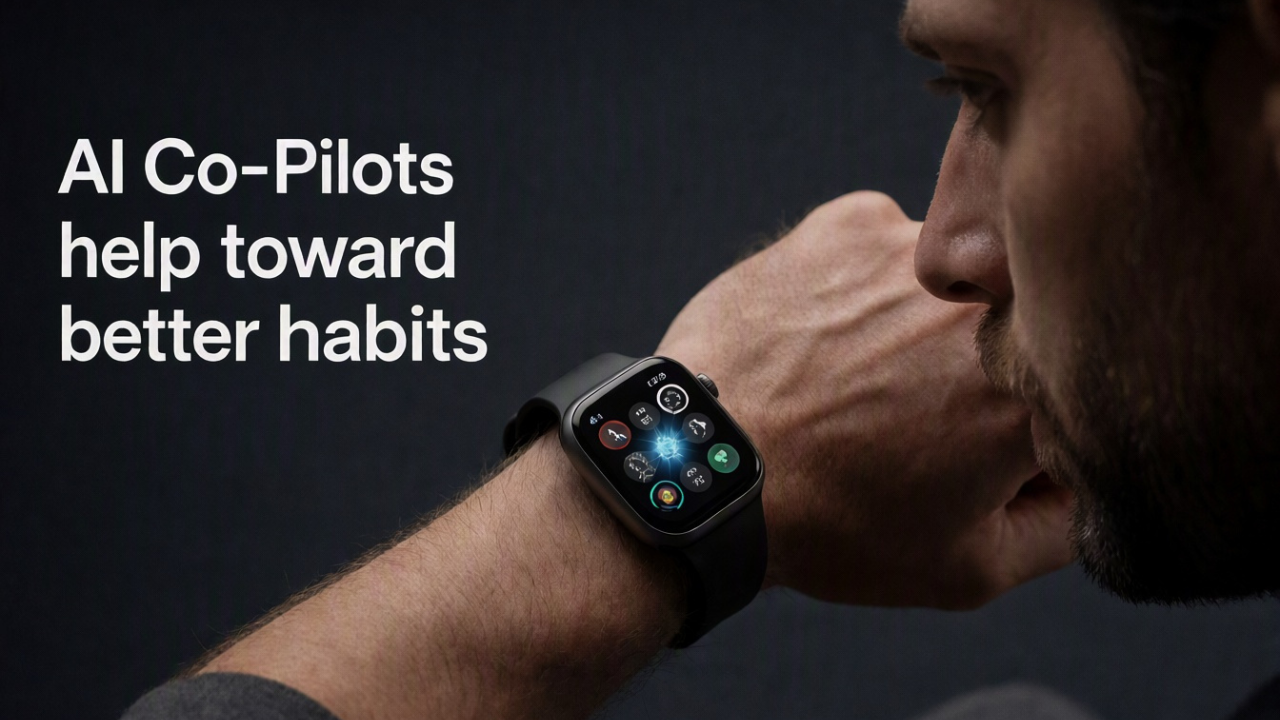
Before I could open the delivery app, a tiny notification popped up on my smartwatch: “Heavy keypresses detected and screen time is high. Deep breath or a 2-minute stretch?”
I paused. I stretched. The pizza craving evaporated.
That wasn’t magic. It was my behavioral co-pilot at work—and it represents the most exciting shift in personal technology we’ve seen in a decade.
Beyond the Rigid Habit Tracker
For years, self-improvement tools relied on blunt force. They screamed at us with loud alarms at scheduled times: Drink water! Meditate now! Go for a run!
The problem? Life isn’t linear. A notification telling you to meditate while you’re in the middle of an argument or rushing a deadline doesn’t help—it frustrates. Rigid schedules ignore our dynamic human state.
Enter the silent AI co-pilot.
Instead of forcing arbitrary routines, modern AI systems act as continuous, quiet observers. By analyzing subtle biometrics—heart rate variability, subtle changes in typing rhythm, micro-expressions, or speech tones—AI can map emotional fluctuations in real time. It senses friction before you even consciously recognize it.
The Power of the Hyper-Personalized Nudge
The secret sauce isn’t just detecting emotions; it’s what the AI does with that data. A good co-pilot delivers micro-interventions—subtle, low-friction prompts tailored specifically to your current psychological state.
- High Stress Detected? Instead of suggesting a 30-minute workout, it suggests a 60-second breathing exercise.
- Low Energy / Slump? It prompts a quick glass of water or a posture check rather than a complex task.
- Focus Drift? It gently hides distracting tabs before you fall down a rabbit hole.
These aren’t disruptive interruptions. They are quiet nudges delivered at the exact moment your brain is open to making a choice.
Why This Works
When technology responds dynamically to how we feel, it removes the heavy lifting from habit formation. You don’t need ironclad discipline when a subtle system gently steers you back on track before you derail.
Of course, privacy is the elephant in the room. Handing over real-time emotional and biometric data requires absolute trust and strict local data processing. But if we solve the privacy puzzle, the potential for personal growth is staggering.
My Take On It
In my opinion, willpower is completely overrated. It’s a finite resource that drains as the day wears on. Relying on sheer grit to build habits usually fails because our emotions constantly sabotage our best intentions.
We don’t need louder devices demanding our attention. We need smarter, quieter tools that understand human nuance.
When AI functions as a silent behavioral co-pilot, technology stops feeling like a master we serve and starts feeling like an extension of our best self.



Sounds like a great tool.
This was an eye opener! Which app does this? I would like to try something like this …
I wouldn’t dismiss willpower. Sometimes we just need to take responsibility for our own habits.